
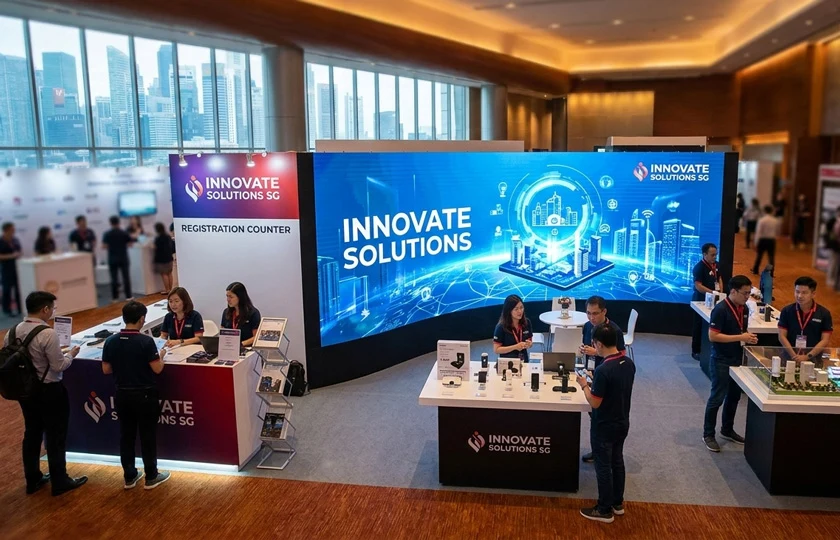
2. CHOOSE THE RIGHT BOOTH TYPE FOR YOUR SPACE AND BUDGET
Custom builds aren’t always the answer — and that’s fine.
Singapore’s convention venues offer a range of booth formats, from modular shell-scheme booths to fully custom builds. A custom booth gives you the most brand control but comes with longer lead times and higher cost. A modular system can look sharp and be reconfigured for future shows, which matters if this is the first of several events you’ll exhibit at this year.
The right choice depends on your budget, how often you’ll reuse the booth, and how much lead time you have before the show. Rushing a custom build with too little runway is one of the most common ways exhibitors end up with a booth that doesn’t match the original vision.
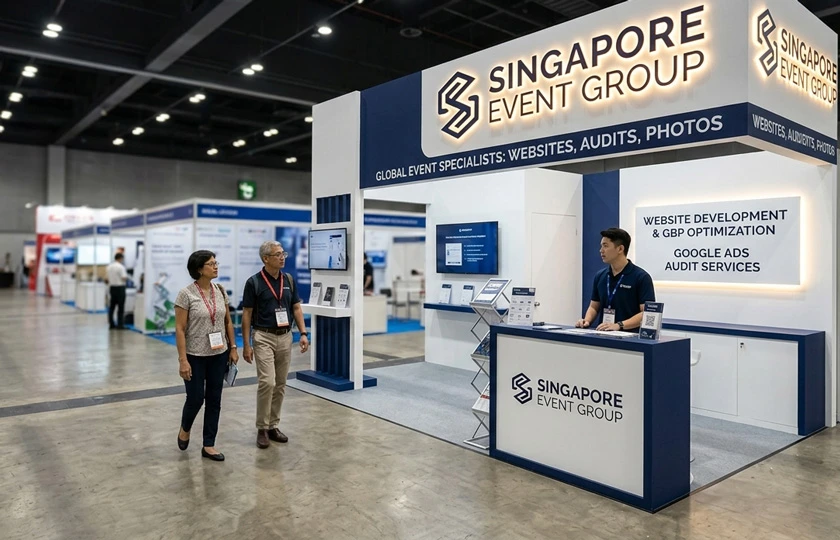
3. DESIGN A BOOTH THAT REFLECTS YOUR BRAND — NOT JUST A BACKDROP
A backdrop with your logo on it is not a brand experience.
The exhibitors who stand out on a show floor usually aren’t the ones with the biggest booth — they’re the ones whose booth is instantly recognisable as theirs, even from across the hall. That comes from consistent use of your brand colours, typography, and materials, not just a printed logo panel.
Think about what a visitor sees at eye level as they approach, not just what looks good in a design mockup. Lighting, material choice, and how your signage reads from 10 metres away all matter more on the day than they do in a rendering.
Want your booth to look like a brand experience, not just a display? See how we approach booth design and build for corporate exhibitors across Singapore.
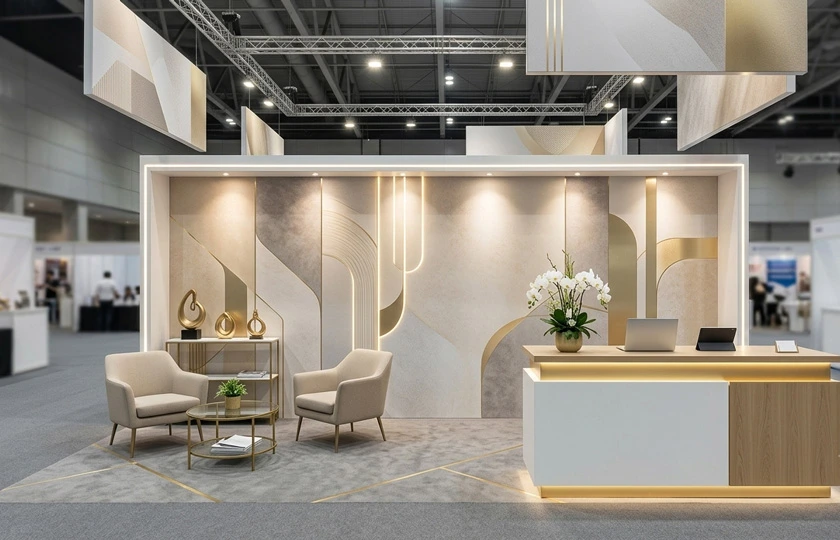
4. PLAN VISITOR FLOW AND ENGAGEMENT, NOT JUST AESTHETICS
A beautiful booth people walk past isn’t doing its job.
Visitor flow is one of the most overlooked parts of booth planning. Where does someone enter your space? What’s the first thing they see? Is there a natural path toward your product or your team, or does the layout leave people standing awkwardly at the edge?
Open, low-barrier entry points generally outperform booths with a raised threshold or a reception-desk feel that makes visitors hesitate. Consider where your team will stand — not clustered near the entrance blocking the view in, and not so far back that the booth feels empty.
5. GET YOUR AV AND TECHNICAL PRODUCTION RIGHT
Screens, sound, and lighting are what make a booth feel alive.
A static booth with printed graphics and nothing else tends to blend into the background. Screens showing product demos, ambient or directional lighting, and clear audio for any presentation area all add energy to a space — but only if the technical execution is solid. A flickering screen or a sound system that can’t be heard over the hall’s ambient noise undermines the whole booth.
If you’re supplying your own AV rather than going through a full-service booth partner, it’s worth renting production-grade equipment rather than consumer-grade gear, and making sure someone is on-site who can troubleshoot if something goes wrong mid-show.
Handling your own booth build but need reliable AV equipment? Our Corporate Event Equipment Rental service supplies screens, sound, and lighting with technical crew support, so you’re not troubleshooting equipment on the show floor.
PLAN LOGISTICS: MOVE-IN, BREAKDOWN, AND ON-SITE SUPPORT
The show isn’t over until the booth is safely broken down.
Move-in windows at Singapore convention venues are often tight, and breakdown at the end of a multi-day show can be just as time-pressured as setup. Plan who is responsible for what during move-in, who’s on-site for technical support during show hours, and how breakdown will be handled — especially if your booth needs to be reused for another show shortly after.
Exhibitor coordination also matters if your company is running multiple booths or working alongside other departments at the same show. A single point of contact for logistics avoids the common problem of vendors receiving conflicting instructions on the day.
FAQs
Q1: How far in advance should I start planning a trade show booth?
A: For a custom booth build, 2–3 months ahead is a safe timeline. Modular or shell-scheme booths can sometimes be arranged faster, but earlier planning always gives more flexibility on design and vendor availability.
Q2: What’s the difference between a modular and a custom exhibition booth?
A: A modular booth uses reusable, reconfigurable components and is generally faster and more affordable. A custom booth is built specifically for your brand and space, offering more design freedom but requiring longer lead times and a higher budget.
Q3: Do I need to handle AV equipment separately from booth design?
A: Not necessarily — some booth partners handle both design and AV production together. If you’re managing booth design yourself, you can still rent AV equipment separately with technical support included.
Q4: How many staff should be at a trade show booth?
A: This depends on booth size and expected foot traffic, but a good rule of thumb is enough staff to engage visitors without crowding the space — typically 2–4 people for a standard booth, more for larger or high-traffic spaces.
Planning a trade show or exhibition in Singapore?
👉 Talk to Mega Events about booth design, production, and on-site logistics — Contact us for a free consultation.
Email us at sales.megaevent@gmail.com or 📞 Call 8061 3416 with your event details!